Run your credit mandate
Configure vault funding and facility controls. Manage allocations, liquidity, and team authority under the mandate’s terms.

Run the mandate. Connect capital to credit.

Build your capital stack.
Offer Senior and Junior tranches where supported, with defined repayment priority and loss allocation.

Put vault capital to work.
Allocate funding to eligible facilities and track each vault’s share of loan exposure, income, and losses.

Set your rate policy.
Choose supported rate models and parameters that govern borrowing costs as utilization changes.

Follow facility performance.
Review balances, utilization, borrower activity, and credit health across the facilities funded by your vaults.

Manage investor exits.
Monitor cash and redemption queues alongside the withdrawal policies that govern each vault’s payouts.


The market behind asset managers.
$256.8T
Nonbank financial assets in 2024
51%
Nonbank share of financial assets
9.4%
Nonbank financial asset growth in 2024
FSB, 16 DEC 2025. 2024 nonbank financial intermediation data across 29 monitored jurisdictions. Includes funds, insurers, pension funds and other nonbank institutions.
Control the capital flow. Within the terms you set.
Define target allocations and exposure limits so each facility operates within your mandate.


Providing clear and standardized information on performance and valuations has become critical to keeping the industry on its strong growth path.

Assign operating roles.
- Separate team permissions. Assign owners, curators, allocators, and guardians the authority needed for their responsibilities.
- Keep valuations governed. Link approved reporters and valuation policies to assets, with required freshness and approval checks.
- Define recovery responsibilities. Set the applicable recovery rules and authorized operators before impaired credit needs action.
Set the mandate. Define how teams act.

Review new assets.
Assess issuer submissions, token behavior, and valuation readiness before making a listing decision.

Set investor access.
Choose verified-investor or approved-wallet access where supported by the vault.

Set deposit minimums.
Define the minimum accepted allocation for your vault’s investor entry policy.

Cap account deposits.
Set per-account capacity alongside the vault’s overall deposit limit.

Configure vault fees.
Choose supported fee models and recipients for the mandate you operate.

Build partner channels.
Approve distribution partners and configure channel splits within your assigned authority.
Operating rules.
Why credit needs operating controls.
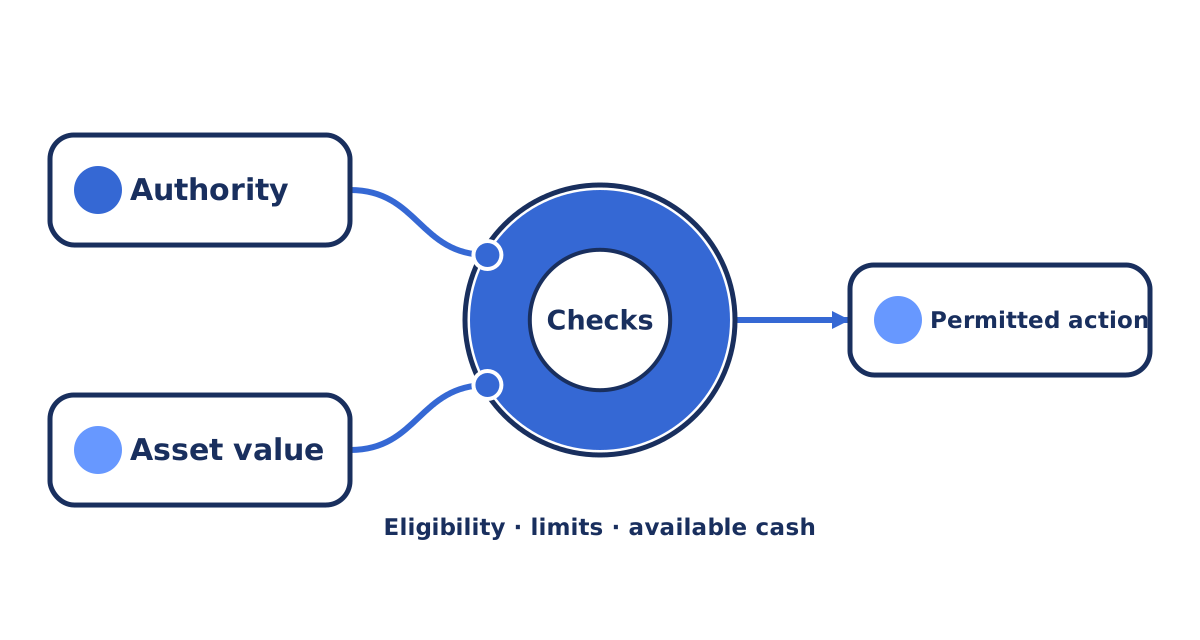
Review assigned permissions, draw limits, valuation requirements and withdrawal queues to understand which facility actions can proceed under governing terms.
Read guide

Recovery rules at origination.
Review the valuation requirements, recovery authority, sale conditions and investor loss allocation recorded at origination before a borrower draws funds.
Read guide
Mandate questions.
Read the documentationYou need the relevant manager role, supported assets and facilities, and a defined mandate. Vault creation and operation depend on current access, configuration, and assigned authority.