Credit controls need clear authority
Review how permissions, transaction approvals, valuation checks, and recorded outcomes fit into a TORQ credit workflow.
What to examine.

Permission model.
Identify the authority for configuration changes, facility actions, and emergency controls.

Data freshness.
Check valuation freshness and dependency availability before acting, including how the workflow handles expired reports or unavailable data.
Wallet signing.
Review the authorized signing wallet and transaction details before approval, so the signer understands the action and permissions being committed.

Canonical outcome.
Follow an action from submission to its confirmed, indexed result, then review the recorded business state before making the next decision.


To limit potential disruptions, financial firms should develop and test response and recovery procedures.
Review the operating environment.
- Operational response. Review pause, monitoring, and incident responsibilities for the actual environment.
- Assurance evidence. Request the scope, date, and limits of any review relevant to the deployment.
The cost of financial data breaches.
$6.3M
Average financial services breach cost
$4.99M
Average global data breach cost
25%
Malicious breaches enabled by AI
IBM, 29 JUL 2026. Study of breaches at 602 organizations, MAR 2025 to FEB 2026. Reported industry averages and malicious-breach share.
Control guides.
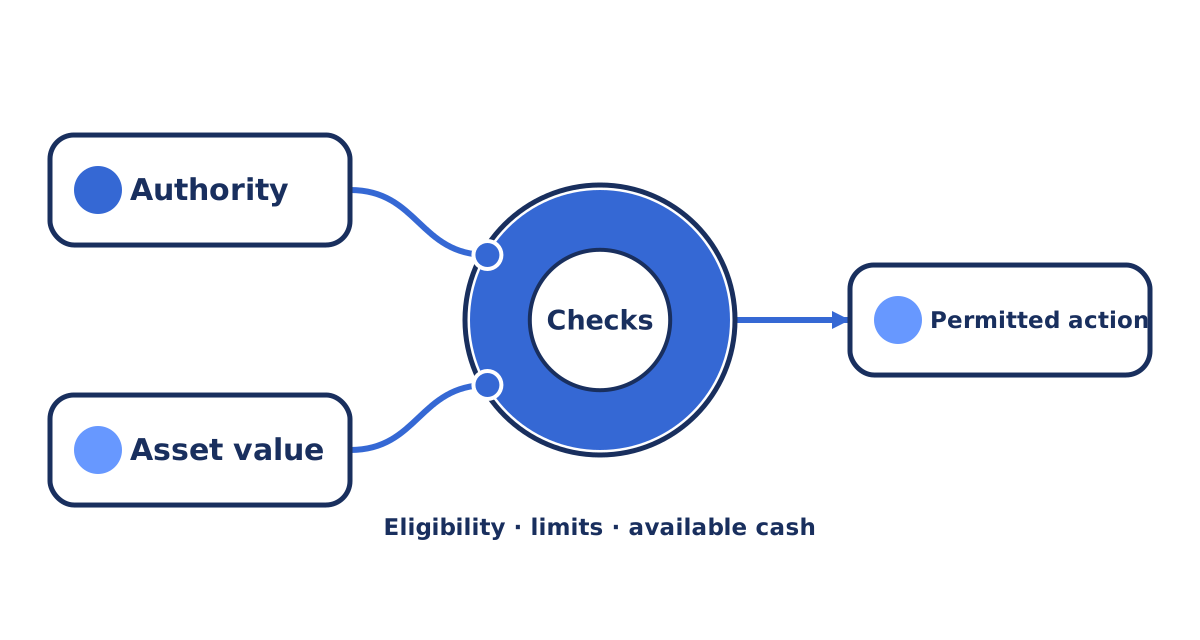
Why credit needs operating controls.
Review assigned permissions, draw limits, valuation requirements and withdrawal queues to understand which facility actions can proceed under governing terms.
Read guide

Recovery rules at origination.
Review the valuation requirements, recovery authority, sale conditions and investor loss allocation recorded at origination before a borrower draws funds.
Read guide
Security questions.
Read developer security docsNo. Permissions and policy checks help govern actions. Borrowers, assets, smart contracts, valuations, and counterparties still carry risk.