Define the capital stack
Structure Senior and Junior vault positions around repayment priority, loss allocation, and the liquidity terms investors need to assess.

Set capital priority.

Senior and Junior positions.
Investors take positions with different repayment and loss priorities under the vault's configured terms.

Exposure stays attributable.
Trace each loan’s debt, repayments, and losses to the vault that funded it, keeping investor exposure tied to the governing capital terms.
Priority and protection.
Review repayment order, Junior subordination, and any configured insurance. No tranche guarantees principal or a return.

Where the capital goes.
Examine the funding vault's facility exposure and the borrowing terms that drive cash flows.


The scale of nonbank credit.
$76.3T
Assets in the FSB narrow nonbank measure
12%
Narrow-measure asset growth in 2024
29
Jurisdictions in the FSB monitoring exercise
FSB, 16 DEC 2025. 2024 data across 29 jurisdictions. The narrow measure covers nonbank credit activities with bank-like financial stability risks, beyond private credit alone.

Understand exit conditions.
- When capital can leave. A withdrawal request may remain queued until the vault has cash available under its payout policy.
Capital and rights.
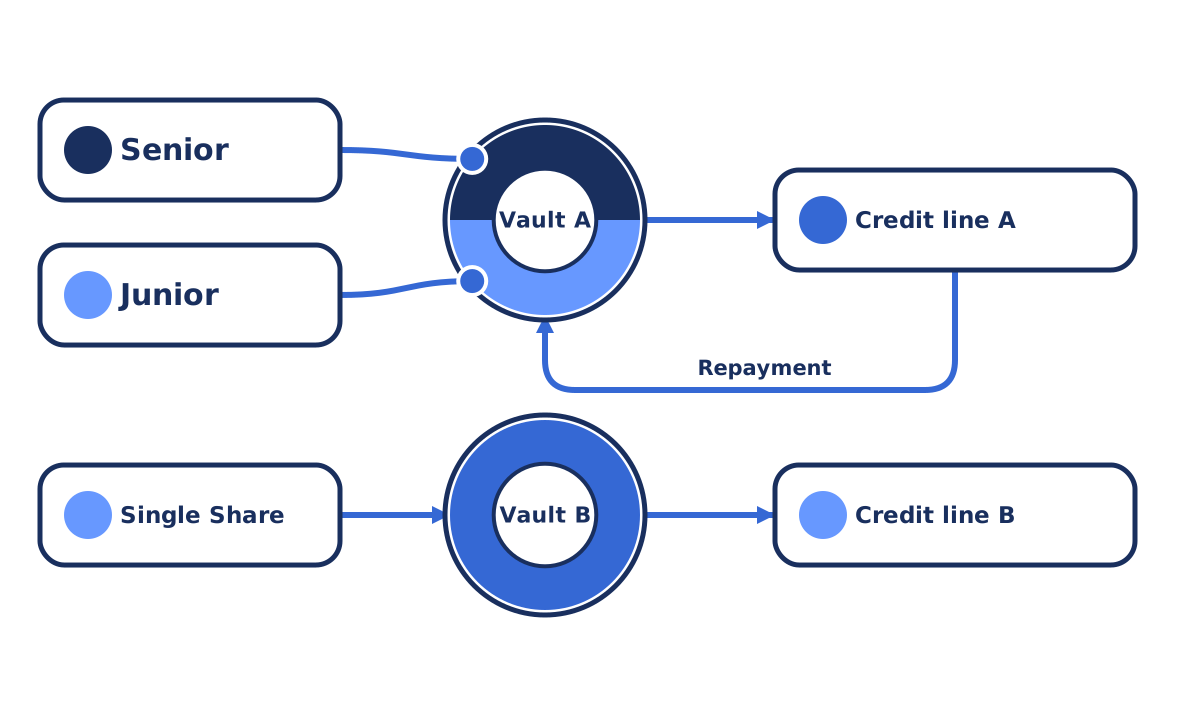
How vault-funded lending works.
See how capital moves from a vault into loans, repayments, and loss allocation, with each outcome attributed to the capital that funded it.
Read guide

Credit recovery rights and responsibilities.
Review recovery authority, investor protections and beneficiary records to understand who can act on impaired credit and receive later proceeds.
Read guide
Structure questions.
Read documentationNo. Senior describes priority under a configured waterfall. It does not guarantee principal, return, or an exit date.