
TORQ
TORQ explains governed credit operations for digital and tokenized assets.
- 03 OCT 2026
- 5 min read
When credit vault withdrawals settle
A redemption request and a cash payment can happen at different times. Work through available cash, a FIFO queue, and the remaining claim before evaluating a vault exit.
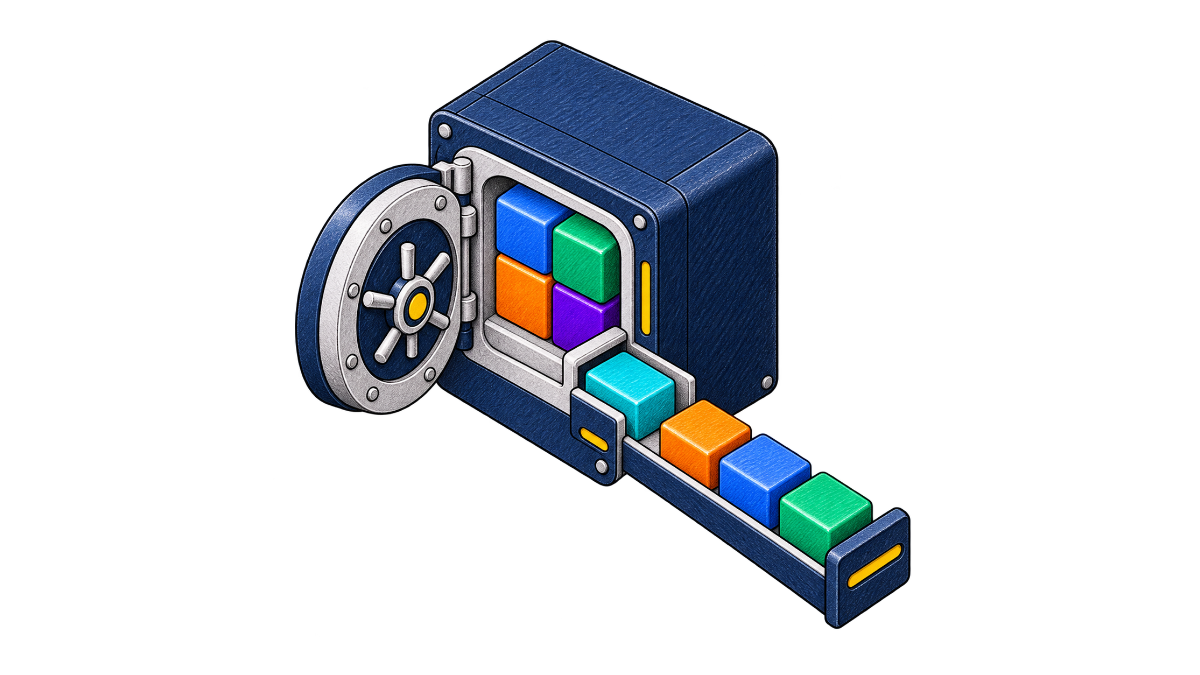
The earliest possible payment depends on cash available to the vault and the rules governing the request. A share balance alone does not tell an investor when the underlying assets can be returned.
TORQ's current vault design can pay the liquid portion of a valid redemption immediately and place the rest in a first-in, first-out queue as a fixed asset claim.
The exact outcome still depends on the deployed vault, eligibility, rate limits, and its terms.
Track three amounts before asking when cash arrives.
Start with the amount requested, the cash the vault may use now, and the amount still owed after any immediate payment.
Accrued interest and the value of outstanding loans are not the same as immediately spendable cash.
A queue records an obligation. It does not create cash or promise the date of the next repayment.
In a stressed facility, losses, restrictions, or a lack of eligible receivers can also affect settlement.
- Requested assets
- What it answers: The value the investor seeks under the applicable conversion and terms.
- What it does not answer: Whether that much cash is available today.
- Available cash
- What it answers: What can satisfy valid requests now after applicable controls.
- What it does not answer: When borrowers will repay or other assets can be realized.
- Remaining claim
- What it answers: The unpaid vault obligation after direct payment or escrow funding.
- What it does not answer: A guaranteed payment date or immunity from recognized loss.
A worked example with two investors.
Assume a vault has USD 100,000 of usable cash and no other pending claims. Investor A makes a valid request for USD 80,000.
Investor B then makes a valid request for USD 70,000. For this example, ignore fees, rate limits, and changes in eligibility.
A receives USD 80,000. The remaining USD 20,000 cash pays part of B's request, leaving B with a fixed USD 50,000 claim.
If USD 30,000 of usable borrower repayment later reaches the vault and no earlier claim remains, that cash can reduce B's unpaid claim to USD 20,000. The example gives no date for that repayment.
The key check is conservation: B's USD 70,000 request equals USD 20,000 paid immediately plus USD 30,000 paid later plus USD 20,000 still owed.
A later transfer from redemption escrow would change custody of reserved cash, not erase the same debt twice.

What the TORQ queue fixes and what it leaves open.
In the documented TORQ V2 flow, a queued request fixes its asset claim when the request is made. Later NAV changes do not reprice that claim.
Fulfilment remains subject to queue order, cash, configured limits, and receiver checks.
This is a description of TORQ's native redemption behavior, not a claim that every vault has the same liquidity or that its queue implements ERC-7540. Review a particular vault's current configuration and binding documents.
Questions to ask before allocating.
- How much cash may be used for redemptions after reserves, limits, and other obligations?
- When does the request become a fixed claim, and how are partial payments recorded?
- Which requests are ahead in the queue, and what can pause or delay fulfilment?
- Could recognized loss reduce an unpaid claim, and how is that decision shown to investors?
- Which reports show direct cash paid, escrow funding, and the remaining vault obligation?

